
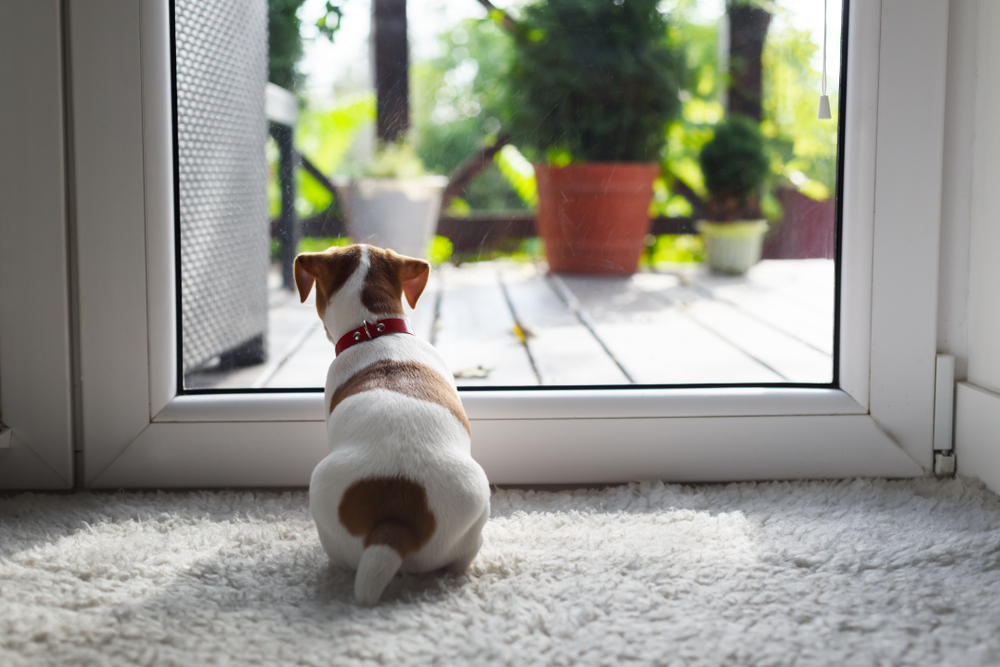
 Does you precious pup exhibit signs of separation anxiety
whenever you or another member of your household isn’t around? We often use this term flippantly, as it’s
precious that our furry friends miss us when we aren’t home. But the reality is that separation anxiety
has the potential to be crippling, and result in some seriously unhealthy
behaviors if left unchecked.
annabidiol (CBD), however, may be the answer to
separation anxiety in canines, as the role that this cannabinoid
serves is to regulate their systems in a way that could potentially help them
calm down. In fact, we’re even starting
to see some veterinarians in their
profession recommend CBD to our pets who show signs of stress
in an effort to give them the relief that they deserve.
What is Separation Anxiety?
Separation anxiety is a term used to describe anxiety
that is triggered when a dog is away from its trusted owner, or another member
of the household with which the dog shares a close bond. Separation anxiety is commonly exhibited by
children who are attached to and emotionally dependent on their parents. The same principles apply to canines, who are
extremely dependent on us for their physical and emotional wellbeing.
Separation anxiety is more common in dogs than in cats
due to the evolution of canines. While
cats still maintain many of their wild traits, having been domesticated for
only a few thousand years, canines have been evolutionarily conditioned to be
more dependent on humans. Therefore,
they’re less capable of fending for themselves, and rely on us to feel their
best. This attachment explains the
precious bond that we share with canines, but it also means that dogs are
fairly prone to feeling separation anxiety when we aren’t around to provide
them with love and attention.
What are Examples of Separation Anxiety?
Separation anxiety implies that a dog is only anxious
when separated from the human who the dog is bonded to. Separation anxiety can manifest under
specific conditions, such as these ones below.
#1: Leaving for Work
A dog may exhibit some signs of separation anxiety
when their owner is at work each day, especially if there is no other person at
home to look after the dog.
#2: Going on a Trip
Separation anxiety is common when a dog’s owners are
away on vacation and the dog is being watched by someone else. The dog may feel worried that the owners are
not going to return.
#3: A Household Member’s Move or Death
Separation anxiety can be a long-term issue if a
beloved member of the household has moved out of the house or has died.
What are Symptoms of Separation Anxiety?
The common signs of separation anxiety include a dog
exhibiting symptoms of anxiety only when a member of the household is not in
the home. These symptoms can include
pacing, panting, whimpering, refusing to eat, trembling, and showing no
interest in playtime.
Separation anxiety can also lead to extreme symptoms
depending on the natural temperament of your dog. More extreme symptoms include destructive
behaviors around the house, such as scratching or chewing furniture, or
urinating inside the home. Even more
concerning behaviors are self-destructive, such as gnawing on their skin or
scratching themselves incessantly.
How is Separation Anxiety Typically Treated in Canines?
Separation anxiety can be quite hard of a condition to
treat, since anxiety treatments work differently from one dog to another. The initial step to controlling separation
anxiety is speaking to a veterinarian, who can rule out any other conditions
contributing to the anxiety. They can
also consider the specifics of your situation and make personalized recommendations.
Some solutions offered are relatively simple, such as
finding ways to keep the dog entertained when you’re not at home. More advanced measures may include some type
of anti-anxiety medication, although not all dog owners are comfortable with
giving their dogs anxiety medications.
Would CBD Help Dogs with Separation Anxiety?
Interestingly, cannabidiol, which is nontoxic to
canines, may be a natural means for helping them deal with the anxiety caused
by being away from the human that they are bonded to. Like humans, dogs possess an endocannabinoid
system, which is a bodily system that uses cannabinoids to regulate specific
bodily process by sending these compounds to cannabinoid receptors found in
every system of the body.
We recognize that cannabidiol works with cannabinoid receptors (CB receptors)
in the brain and nervous system that balance specific processes including the
regulation of neurotransmitters like cortisol and serotonin, two hormones that have
an impact on anxiety and stress levels.
When consuming CBD, it has the potential to increase feelings of
calmness and bliss based on its relationship to these cannabinoid receptors.
Because dogs have an endocannabinoid system
(ECS), CBD can fulfill these roles just as effectively in
canines as it does in humans, as we are finding out when it comes to anxiety
or anxiousness.
What You Should Know About Administering CBD to Your Dog for Separation
Anxiety
By keeping all of these tips in mind, you will have
the highest likelihood of success with the hemp plant for addressing separation
anxiety.
Tip #1: Talk to Your Veterinarian
Your veterinarian knows your dog’s needs and medical
circumstances and can help you come up with a more personalized routine. Basically, a vet can consider medications
that your dog is on to determine whether or not they can be safely taken with
CBD.
Tip #2: Choose a CBD Product for Dogs
Make sure that you choose a CBD formula made specially
for dogs, as these products are safer.
For one thing, they have dosing guides that consider the weight of your
dog. Secondly, they are made with
ingredients that are nontoxic to dogs, whereas CBD products for humans may
contain essential oils and other ingredients that can be deadly to canines.
Tip #3: Be Consistent with Dosing
You should try incorporating cannabidiol into your
dog’s daily routine for the best results.
The more consistently one takes hemp, the more effectively the
endocannabinoid system can use it. When
taken sporadically, the endocannabinoid system tends to store a good portion of
cannabinoids for later use.
Tip #4: Choose an Agreeable Formula and Delivery Method
Make sure that you select a formula and delivery
method that works with your dog’s needs.
For separation anxiety, you’ll need a non-topical method like a treat or
a tincture. Choose a formula that has a
flavor that your dog loves so that they enjoy each dose.
A Calmer Dog is a Happier Dog
Overall, it can be hard to see our dogs become so
distressed when we are away from them, but fortunately, there are ways to help
your pet manage their separation anxiety.
For a natural, holistic option, you can try CBD, which again, is
already taken by dogs all over the country for various purposes.
Leave a Reply