
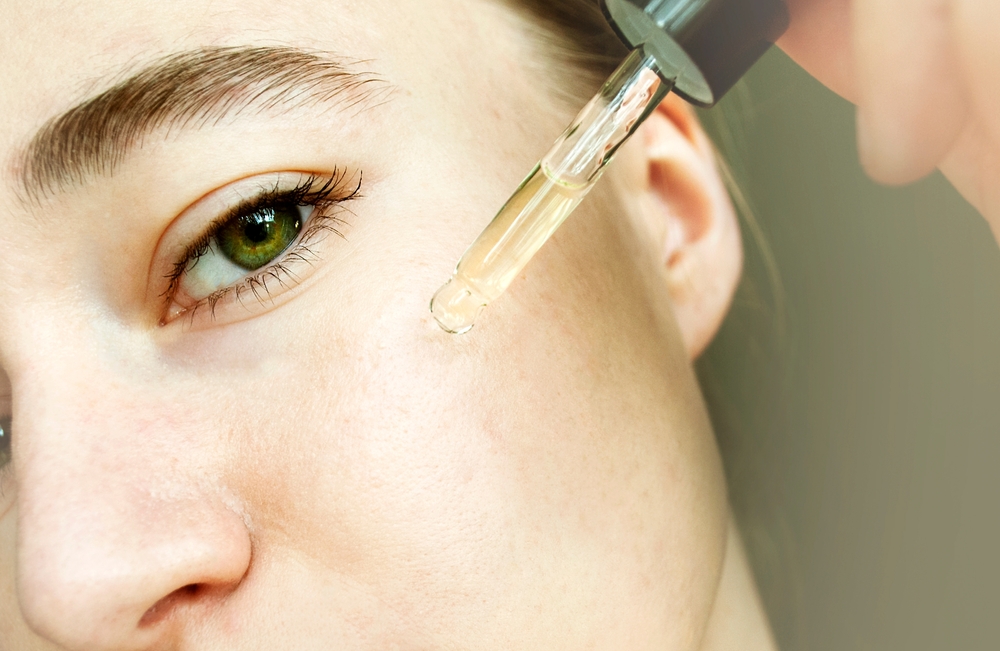
Many of us have, by now, experimented with CBD tinctures,
as this product in particular has proven to be hugely popular among those
interested in the properties of the hemp plant.
CBD tinctures come in all kinds of milligram strengths, formulas and
flavors, but what they all share in common is that they provide an ample
serving of cannabidiol (CBD) that possesses all kinds of valuable properties
and effects that can improve the way in which we feel. While tinctures are, by nature, intended for
sublingual administration, they are more versatile than you may think. But, what about your face and is this, in
fact, even advisable?
What Exactly is a CBD Tincture?
A CBD tincture, also referred to as a “CBD oil” or
“CBD drops”, is a basic oil-based formula that comes in a dropper bottle, which
is meant to be administered and absorbed sublingually. When absorbed through the sublingual tissue,
tinctures can take effect in somewhere between 15 and 45 minutes, with the
effects lasting for several hours.
What Ingredients are in a CBD Tincture?
Ultimately, the ingredients in a CBD tincture are
chosen at the discretion of the manufacturer.
But, the two basic ingredients that you’ll find in every tincture are:
- Hemp Extract: Whether
it be full spectrum hemp extract (every compound naturally found in hemp),
broad spectrum hemp extract (a THC-free version of full spectrum) or CBD
isolate (pure cannabidiol), some type of hemp extract must be present in a CBD
tincture. - A Carrier Oil: The
carrier oil is an essential component of a tincture as it dilutes the highly
concentrated hemp extract to an amount that’s suitable for daily
administration. The most common type of
carrier oil used in a tincture is MCT oil, a coconut derivative. Hempseed oil is another popular choice.
Some CBD tinctures may contain additional ingredients
as well, such as:
- Flavoring: Many
people prefer a flavored CBD tincture, and the flavoring can be either
naturally or artificially derived. - Essential Oils: Yes,
essential oils offer a lot of useful properties to the body as well, and some
tinctures may contain certain essential oils such as lavender, lemon or
peppermint. - Herbal/Botanical Extracts:
Some companies produce specialty tinctures that contain additional “active
ingredients” beyond the hemp, such as ashwagandha, melatonin or lemon balm.
Applying a CBD Tincture to Your Face: What Can it Offer?
Before we discuss whether or not a person should apply
a CBD tincture to their face, let’s talk about why. We know from ample amounts of studies that
the hemp plant actually offers some properties that pertain to the skin in
particular.
In one study,
hemp was found to offer both anti-inflammatory and sebostatic properties to the
skin when applied topically, which may be helpful to those with acne. Sebostatic refers to the ability to regulate
sebum production within the pores. We
also know that cannabidiol is an antibacterial
agent that may kill bacteria found on the skin.
Beyond that, CBD oil is a moisturizing product by
nature, since it contains a carrier oil that provides moisture to the skin when
applied. Therefore, applying a CBD
tincture to the face could, in theory, act as a moisturizing step in one’s
skincare routine.
So, to answer the general question, the answer is yes:
you can apply a CBD tincture to your face.
This would provide the skin of the face with the properties found in CBD
that relate to the skin’s overall function.
What to Consider Before Applying a CBD Tincture to Your Face
Overall, you can apply a CBD tincture to your face, as
it could offer all kinds of valuable hemp-derived properties to your skin. However, before you do apply any CBD tincture
to your skin, consider these things first and keep in mind that the best
tincture(s) for your skin should contain only hemp extract and a
non-comedogenic carrier oil like MCT or hempseed.
#1: Ingredients
Always read the ingredients of a tincture first, since
some formulas are better for your skin than others. For instance, a tincture that’s flavored with
something sweet will likely contain sugar, which could not only leave your skin
feeling sticky, but attract certain sugar-consuming yeast that can lead to
fungal infections of the skin.
#2: Type of Carrier Oil
The carrier oil should be considered as well, since
some are more comedogenic than others.
“Comedogenic” refers to the likelihood of an ingredient clogging the
pores and causing breakouts. Essentially,
MCT oil and hempseed oil are low on the list of comedogenic ingredients. CBD oils made with olive oil or rosehip oil
could be more comedogenic.
#3: Milligram Strength
CBD oils come in different milligram strengths,
determining their potency. There is no
way you could “overdose” on cannabidiol by applying too high of a strength to
the skin. But, a CBD tincture with an
extremely low milligram strength, like anything below 500mg per 30ml bottle,
could simply not be potent enough to provide you with the effects of the hemp
plant that you’re seeking out.
Leave a Reply