
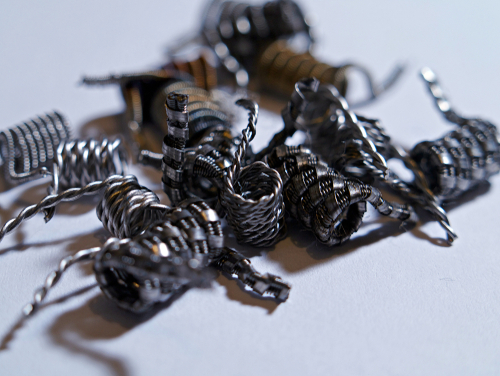
 Getting
into DIY vaping is quite an investment of time and effort, but the results are
undeniably worth it. Building your own
coils gives you total freedom when it comes to how you experience your vapes,
and for tech nerds like us in particular, it can be deeply gratifying as a fun
expression of creativity.
owever,
there’s a bit of learning curve, since coil-building is not an intuitive endeavor. It requires a good understanding of how
different coil builds react with different temperatures, and some basic
understanding of engineering to ensure maximum satisfaction, not to mention
safety..
The Basics on Building Vape Coils
Basically,
building your own vape coils is a hobby many people engage in so that they can
experience more precise control over the outcome of their vapes. Certain types of coils are ideal at certain
temperatures or other vaping output modes settings, and by building your own,
you’re no longer restricted by what’s available from a certain brand or
retailer.
In
terms of the type of metal wire, it’s important to know that each one is
compatible with specific settings of your vaping device, which means that they
cannot all be used interchangeably with one another. Different types of wire materials have
different ramp-up times (how quickly they absorb heat to vaporize your
e-juice), different gauges, and different resistance levels.
Most
people who build their own coils are vaping in temperature control – that is,
adjusting the output of the device according to temperature rather than
wattage. They require specific types of
wire based on their TCR (temperature coefficient of resistance), and the TCR of
any given wire material is based on how much its resistance increases as the
temperature the mod is set at goes up.
Mods recognize the resistance of these standard wire materials so that
they can recognize when the coil rises to a specific temp, and at this point,
the current is reduced so that the coil never exceeds that temperature, which
prevents it from burning.
Kanthal Wires
First,
let’s talk about kanthal wires, which are made from iron, chromium, and
aluminum. They’re great for vaping in
wattage mode and are a beginner-friendly option because of their versatility
when it comes to different wattages.
They’re also malleable enough, while still retaining their coil
shape. They’re great for single-wire
coil builds in particular, and better yet, they’re inexpensive. But, kanthal wire is not compatible with
temperature control (TC) mode, so if you’re looking to get into that style of
vaping, this material is, sadly, a no go.
Stainless Steel Wires
Next
up, we have stainless steel, which is the only wire material that is compatible
with both wattage mode and TC mode, making it uniquely versatile. Stainless steel is an alloy of chromium,
nickel, carbon, copper, and manganese, with nickel contents ranging from
10-14%. We point that out because some
individuals do have an allergy to nickel, with varying degrees of sensitivity.
Stainless
steel wire comes in various grades, and SS316L is considered the standard
choice, while SS317L is also popular. As
far as coil building is concerned, it’s great for forming into a coil, and
holds its shape wonderfully. The ramp-up
time is faster than kanthal, but we don’t recommend it for pulse mode, as it
can leech chemicals into your vapor that don’t taste pleasant. It’s also a wire you don’t want to dry burn
for that reason.
Nickel Wires
Nickel
wire, aka ni200, is pure nickel, so again, anyone with an allergy to nickel
should take note. Although a common
choice for temperature control vaping, it’s not compatible with wattage mode at
all. Nickel is nice and soft, so it’s
malleable, but that can actually be a big drawback since it struggles to hold
its shape. So, forming it into a perfect
coil can even be a challenge. A positive
is that it’s a very inexpensive as well.
Titanium
Finally,
we have titanium, which is also only compatible with TC vaping, so don’t try to
use it when vaping in wattage mode.
Titanium is also the most controversial wire as it’s the most prone to
igniting, presenting a potential safety hazard – although it’s very rare for
this to happen, as vapers rarely reach the temperatures that would cause any
kind of ignition risk. Dry-burning
titanium wire is, however, dangerous, for those reasons. And, it must be pointed out that fewer
companies are carrying it these days because of potential hazards.
But,
titanium wire is super easy to form into coils, and does hold its shape
beautifully. So, if you’re able to score
some, you will be rewarded.
Which Vape Coil Material Should I Choose?
As you
can see, all types of metal have their clear pros and cons, not to mention
compatibilities with different vaping modes.
So, we encourage you to explore the different options for yourself and
get to experimenting. By and large,
stainless steel is a failproof option if you ask most vapers, thanks to its
versatility, safety, and versatility when it comes to the coils that you can
build with it. However, it’s clear that
every vaper has their personal preference, and you’ll decide which metal you
prefer only through trial and error.
Leave a Reply