
 Vapers enjoy looking at and trying out certain vaping
device. And, did you know that some
vapers look at a device’s output current and output voltage? This may not seem crucial to most, as say,
battery capacity, but like battery capacity, output current and output voltage
are indicators that contribute to a device’s performance, since each will determine
the overall operation of power it can handle. However, a device’s efficiency and other
conditions can impact these two things, which is what we will be discussing
here today.
Getting to Know Output Voltage and Output Current
Output voltage and current are two important concepts
in electrical and electronic systems, each referring to different aspects of
how electrical power is delivered from a source to a load.
ØOutput
Voltage (V): This is the electrical potential
difference provided by a power source. The voltage determines the potential
energy per unit charge available to drive electric current through a load. In simple terms, voltage can be thought of as
the ‘push’ that drives the flow of electrons in a circuit.
ØOutput
Current (I): This is the flow of electric charge and is
measured in amperes (A). Current represents how many electrons are flowing
through the circuit. In a given circuit,
the amount of current depends on the voltage provided by the power source and
the resistance of the circuit.
The interplay between voltage and current is crucial:
- Power Delivery: Power
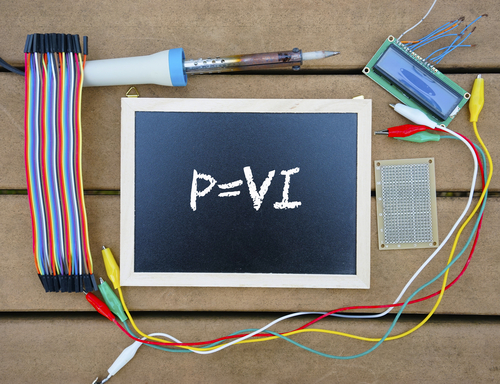
(P) in an electrical circuit is the product of voltage and current (P = V x I).
This means the amount of power delivered
to a load depends both on the voltage level and the amount of current flowing. - Ohm’s
Law: Ohm’s Law states that V = I x R,
where R is resistance. This implies that
for a given resistance, an increase in voltage will lead to an increase in
current, and vice versa. - Device Compatibility:
Devices are designed to operate at specific voltage and current levels. Providing too high a voltage can damage
components, while too low a voltage might not be sufficient to operate them. Similarly, a current that’s too high can cause
overheating and damage, while too low a current might not be effective.
- Efficiency and Safety:
The right combination of voltage and current is essential for efficient
operation of electrical devices. It’s
also crucial for safety, as incorrect voltage or current can lead to short
circuits, overheating, or electrical fires. - Applications Vary: In
practical terms, different devices require specific output voltages and
currents to operate correctly. For instance, a mobile phone charger and an
industrial motor operate at vastly different voltage and current levels.
Understanding the impact of output voltage and current
is crucial for designing, troubleshooting, and safely using electrical and
electronic systems.
Why Do Some Vaping Devices Have Output Voltage and Output Current?
Vaping
devices, particularly the more advanced ones, often feature
output voltage and current settings to provide users with more control over
their vaping experience.
Reason #1: Customization of Experience
These settings allow users to customize their vaping
experience. By adjusting the voltage and
current, users can control the amount of vapor produced, the intensity of the
flavor, and the strength of the throat hit. This is particularly appealing to experienced
vapers who have specific preferences:
- -Higher voltage generally produces more
vapor and a stronger flavor. - -Lower voltage results in a milder
experience.
Reason #2: Compatibility with Different Atomizer Coils
Different atomizer coils, which are the heating
elements in vaping devices, have varying resistances. Adjusting the voltage and current ensures that
the device is compatible with these different coils. For instance, higher resistance coils might
require lower voltage to prevent burning, while lower resistance coils might
need higher voltage for optimal performance.
Reason #3: Battery Life Management
Adjusting these settings can also impact battery life:
- -Lower voltage and current settings usually
consume less battery power, which can be beneficial for prolonged use without
recharging. - -Higher settings can drain the battery
faster to put it simply.
Users can balance their preferred vaping intensity
with the need for longer battery life.
Reason #4: Safety
Regulating voltage and current can also be a safety
feature. You see, advanced vaping
devices have safety functionalities/protocols that prevent issues like
overheating, short circuits, and overcharging.
Hence, that ability to control voltage and current has a part in these
safety features, as it prevents the device from operating outside of safe
parameters.
Reason #5: Optimizing Flavor and Vapor Production
Different e-liquids can respond differently to various
heat levels. By adjusting the voltage
and current, users can find the optimal settings for their preferred e-liquid,
enhancing flavor and vapor production.
Basically, this customization can lead to a more satisfying experience
for those who understand how to balance these settings effectively.
How Do You Know if a Vaping Device Has Output Voltage and Output
Current?
To determine if a vaping device has output voltage and
output current, you typically need to check its specifications or use measuring
tools. Here are a few steps you can
follow:
1.Check the Specifications:
Most vaping devices come with a manual or specifications listed on the
packaging or the manufacturer’s website. These specifications usually include details
about output voltage and current.
2.Use a Multimeter:
If you have a multimeter, you can use it to measure the output voltage and
current directly. To measure the
voltage, set the multimeter to the appropriate voltage range and touch the
probes to the output terminals of the vaping device. For current, you might need to set up the
multimeter in series with the device, which can be more complex.
3.Built-in Indicators:
Some advanced vaping devices have built-in displays or indicators that show the
current voltage and/or current settings or outputs.
4.Consult the Manufacturer:
If you’re unsure and the information isn’t readily available, you can contact
the manufacturer or refer to their website for technical details.
Online Reviews and
Forums: Sometimes, users and reviewers will test and provide this information
in online forums or review sections.
Leave a Reply