
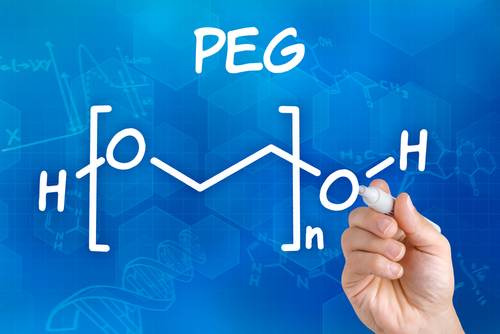
 Polyethylene
glycol (PEG) is a polyether compound, a polymer made by
linking together units of ethylene glycol, a simple diol compound. It is widely used in various fields due to its
unique properties. However, when it comes to CBD products, specifically
CBD E-Liquids, you might have noticed a lot of brands
not using it. If you’re wondering why
this, continue reading on here.
What is the Chemical Stricture and Physical Properties of Polyethylene
Glycol (PEG)?
Polyethylene Glycol, aka, “PEG”, is composed of
repeating units of ethylene glycol, connected by ether bonds. Its formula can be generally represented as
H-(O-CH2-CH2)n-OH, where ‘n’ represents the number of repeating units. which
can vary, leading to PEGs of different molecular weights. The “CH2” represents the ethylene
group, and the “O” represents the oxygen atom that bridges the
ethylene units, forming a polymeric chain.
The molecular weight of PEG can be adjusted by controlling the number of
ethylene glycol units in the polymer, resulting in PEGs with varying properties
and uses.
Now, Polyethylene Glycol can be a liquid or a solid,
depending on its molecular weight. Lower
molecular weight PEGs are typically liquids, while higher molecular weights
result in waxy solids. PEG is soluble in
water, and even many organic solvents, making it quite versatile.
What is Polyethylene Glycol’s Biocompatibility and Uses in Medicine and
Industrial Applications?
PEG is a water-soluble, non-toxic, and non-immunogenic
compound that has found numerous applications in pharmaceuticals and
biomedicine. Here are some key aspects:
Biocompatibility:
1.Non-Toxicity:
PEG is generally considered safe and non-toxic when used in appropriate
concentrations. It has a long history of
use in pharmaceuticals and medical products without significant adverse
effects.
2.Non-Immunogenicity:
PEG does not typically induce an immune response in the body, making it
suitable for use in drug formulations and medical devices that need to interact
with biological systems.
3.Water Solubility:
PEG is highly water-soluble, which makes it suitable for use in various
aqueous-based medical applications.
4.Low Molecular Weight PEGs:
Lower molecular weight PEGs are readily excreted by the kidneys, making them
ideal for applications where rapid clearance from the body is desired.
Uses in Medicine:
1.Drug Delivery:
PEG is commonly used in drug delivery systems to enhance the solubility and
bioavailability of poorly soluble drugs. It can be conjugated to drugs or used as a
part of drug formulations to improve drug delivery, stability, and controlled
release.
2.Protein and Peptide Stabilization:
PEG can be used to stabilize proteins and peptides, preventing denaturation and
aggregation. This is particularly
important in the development of biopharmaceuticals and vaccines.
3.Contrast Agents:
PEG can be used to modify and enhance the properties of contrast agents used in
medical imaging, such as MRI and CT scans, making them safer and more
effective.
4.Wound Healing:
PEG-based hydrogels and dressings are used in wound care and tissue engineering
applications to promote wound healing and tissue regeneration.
5.Lubricants and Coatings:
PEG is used as a lubricant and coating in medical devices such as catheters and
surgical instruments to reduce friction and improve their performance.
6.Colonoscopy Preparation:
PEG-based solutions are commonly used as laxatives to cleanse the colon before
colonoscopy procedures.
7.Ophthalmic Applications:
PEG is used in eye drops and ointments to increase the retention time of drugs
on the ocular surface, improving their therapeutic effectiveness.
8.Diagnostic Assays:
PEG can be used in diagnostic assays and tests, including polymerase chain
reaction (PCR) and enzyme-linked immunosorbent assays (ELISA), to enhance their
sensitivity and specificity.
Industrial Applications:
In the industrial realm,
PEG is used in surfactants, in the manufacture of laxatives, and as a
lubricant, among other uses. Its
properties make it suitable for a variety of applications ranging from
manufacturing processes to personal care products.
What is PEGylation?
PEGylation
refers to the process of attaching PEG chains to other molecules,
such as drugs or proteins. PEGylation can improve the stability and solubility
of these molecules and has become a significant technique in the development of
modern pharmaceuticals.
Essentially, PEGylation is used in the development of
various pharmaceutical products, including PEGylated liposomes for drug
delivery, PEGylated proteins or peptides for therapeutic use, and PEGylated
small molecules to improve their pharmacological properties. It has been a valuable strategy in the design
of biopharmaceuticals and drug delivery systems, helping to optimize their
safety and efficacy profiles.
Why isn’t Polyethylene Glycol Typically Used in CBD Products?
As you can see, Polyethylene Glycol is commonly used
in a variety of products, including pharmaceuticals and cosmetics, as a
solvent, softener, and moisture-carrier. However, there are concerns about its
use in CBD-based products for several reasons.
Reason #1: Degradation at High Temperatures
PEG can degrade at high temperatures, which is a
concern particularly in CBD vaping products like CBD e-liquids. When heated, PEG can break down into
potentially harmful compounds like formaldehyde, which is a known carcinogen.
Reason #2: Potential for Allergic Reactions
Although rare, some individuals may have allergic
reactions to PEG. This is particularly a
concern for those with sensitive skin or allergies to this compound.
Reason #3: Quality and Purity Concerns
The presence of PEG might raise concerns about the
overall quality and purity of the CBD product.
Many users and manufacturers prefer natural or minimally processed
ingredients to maintain the integrity of cannabidiol.
Reason #4: Absorption and Bioavailability
There is some debate about how well PEG interacts with
CBD and whether it affects the absorption and bioavailability of cannabidiol in
the body. Some argue that other carriers
might be more effective.
Reason #5: Public Perception and Demand for Natural Ingredients
There is a growing demand for more natural and organic
products in the wellness and health industry.
The inclusion of synthetic compounds like PEG might not align with the
preferences of many CBD users.
It’s important to note that while these concerns
exist, PEG is generally recognized as safe by regulatory bodies like the FDA
for use in many products. Again, this is
due to its versatility and low toxicity, thus it continues to be a compound of
significant interest in many fields, including medicine, biology, and industry. However, due to the specific context of CBD
usage and the concerns listed above, some manufacturers and consumers choose to
avoid it.
Leave a Reply